
Countertop fabrication · 35 min read
Choosing Countertops with Confidence
Compare marble, quartzite, granite, and porcelain with a practical focus on beauty, performance, care, and fabrication.
Excerpt: Selecting a countertop material is one of the most consequential decisions in any kitchen or bathroom renovation, shaping daily routines, maintenance habits, and the overall character of a home for decades. This guide walks homeowners through the practical differences between marble, quartzite, granite, and porcelain, covering durability, appearance, cost considerations, fabrication, maintenance, and long-term value, so you can make a decision grounded in how you actually live rather than showroom impressions alone.
Why the Countertop Decision Matters More Than You Think
A countertop is not simply a decorative surface; it is a working platform that absorbs heat, resists knife nicks, tolerates spills, and anchors the visual identity of a kitchen or bathroom for many years. Unlike paint colors or light fixtures, which can be swapped out over a weekend, countertops are a semi-permanent investment. Removing and replacing slab material typically involves disconnecting plumbing, disrupting cabinetry, and paying for both demolition and new fabrication, which makes the upfront choice far more consequential than most other finish selections in a remodel.
Homeowners often begin their search focused purely on appearance, gravitating toward whatever pattern looks best in a showroom or on a design website. While aesthetics matter enormously, a countertop chosen without regard to performance characteristics can become a source of ongoing frustration. A porous stone in a household with young children who leave juice glasses sitting out, or a heat-sensitive surface in a kitchen where hot pans are routinely set directly from the stove, can lead to premature staining, etching, or cracking. The goal of this guide is to help you weigh appearance against real-world performance so that the surface you fall in love with today still makes you happy five, ten, or twenty years from now.
It also helps to recognize that no single material is universally "best." Each of the four materials covered here—marble, quartzite, granite, and porcelain—has genuine strengths and genuine trade-offs. The right choice depends on your cooking habits, cleaning tolerance, budget, design goals, and even the climate and lighting conditions of your specific home. This article is structured to walk through each material in depth, then compare them directly across the criteria that matter most to everyday homeowners.
Understanding Natural Stone Versus Engineered and Ceramic Surfaces
Before comparing individual materials, it is worth understanding the broader categories they fall into, because this distinction explains many of their performance differences. Marble, quartzite, and granite are all natural stones, meaning they are quarried directly from the earth and cut into slabs with minimal alteration beyond cutting, polishing, and sometimes sealing. Because they are formed by geological processes over millions of years, no two slabs are identical, and even slabs from the same quarry block can vary in veining, color saturation, and mineral inclusions.
Porcelain, by contrast, is a manufactured material made from refined clays and mineral powders that are compressed under extreme pressure and fired at very high temperatures. This manufacturing process allows porcelain producers to achieve remarkable consistency from slab to slab, and it also allows manufacturers to replicate the visual appearance of natural stone, wood, or concrete through advanced digital printing technology applied before firing.
This natural-versus-manufactured distinction matters because natural stones inherently vary in porosity, hardness, and chemical composition depending on their mineral makeup, while porcelain's properties are engineered and therefore far more predictable and uniform across batches. Neither category is inherently superior; the differences simply mean that shopping for natural stone requires viewing the actual slab you intend to purchase, while shopping for porcelain generally allows more confidence in matching a sample to the final installed product.
Marble: Timeless Elegance with Real Maintenance Demands
Marble has been used in architecture and design for thousands of years, and its dramatic veining and soft luminosity remain unmatched by any other material discussed here. Formed through the metamorphism of limestone under heat and pressure, marble develops the flowing, often dramatic vein patterns that make each slab feel like a unique piece of natural art. Classic varieties such as Carrara, Calacatta, and Statuario each carry distinct veining characteristics, background tones, and price points, giving homeowners considerable range within the marble category itself.
The primary appeal of marble lies in its visual softness. Unlike the sometimes busy or high-contrast patterns found in granite, marble's veining tends to move in graceful, organic lines against a typically white, gray, or occasionally colored background, lending a sense of quiet luxury that many designers consider unmatched for bathroom vanities, fireplace surrounds, and kitchen islands used primarily for display rather than heavy food preparation.
However, marble's chemical composition, primarily calcium carbonate, makes it notably reactive to acids. Common kitchen substances such as lemon juice, vinegar, wine, and tomato sauce can etch the polished surface on contact, leaving a dull mark where the acid has reacted with the stone even if the spill is wiped up promptly. This etching is a chemical change to the stone surface itself, not a stain that can be cleaned away, and while it can sometimes be minimized through professional polishing, it cannot always be fully reversed with home remedies. Homeowners who choose marble for active cooking surfaces should go in with clear expectations that some etching over time is a normal characteristic of living with the material, not a sign of a defective installation.
Marble is also relatively soft on the mineral hardness scale, generally falling between three and four on the Mohs scale, which makes it more susceptible to scratching from knives, cast iron cookware, or dense ceramic items dragged across the surface than harder stones like granite or quartzite. Many marble owners embrace this softness as part of the material's character, allowing a "living finish" to develop over years of use, sometimes achieved intentionally through a honed rather than polished finish that already has a matte appearance and shows etching and wear less dramatically than a high-gloss polish.
Sealing is an important and ongoing maintenance requirement for marble. Because the stone is porous, a quality penetrating sealer helps reduce (though not eliminate) the rate at which liquids soak into the surface and cause staining. Sealers typically need reapplication on a periodic basis, and the exact frequency depends on the specific stone's porosity, the sealer product used, and how heavily the surface is used. Homeowners should budget time for this maintenance step and view it as a routine part of stone ownership rather than an occasional afterthought.
Quartzite: The Natural Stone That Rivals Granite's Toughness
Quartzite is frequently confused with quartz (an engineered material discussed briefly later for context) due to the similarity in name, but true quartzite is an entirely natural stone formed when sandstone is subjected to intense heat and pressure deep within the earth, causing the quartz grains within the sandstone to recrystallize into a dense, interlocking structure. This geological transformation produces a stone that is significantly harder and more durable than marble while often displaying a similarly soft, flowing veined appearance that appeals to homeowners who love the marble look but want better everyday performance.
On the Mohs hardness scale, quartzite typically registers around seven, making it comparable to or even harder than granite and considerably more scratch-resistant than marble. This hardness also translates into strong resistance to heat, meaning quartzite countertops can generally tolerate hot cookware set directly on the surface with less risk of thermal shock or discoloration, though using trivets remains a wise practice with any natural stone to avoid any risk of damage at seams or edges.
Because quartzite is composed primarily of quartz rather than calcium carbonate, it is far more resistant to acidic etching than marble, making it a popular choice for homeowners who want the light, veined aesthetic of marble in a kitchen where lemons, wine, and tomato-based dishes are regular fixtures. That said, quartzite is still a porous natural stone and does require sealing, just as marble and granite do, to protect against staining from oils, wine, and other liquids that can penetrate the surface over time.
One important caveat for shoppers is that the term "quartzite" is sometimes used loosely or even incorrectly by suppliers to market stones that are actually dolomitic marble or other softer calcite-based stones with a quartzite-like appearance. Because true quartzite's performance advantages come specifically from its quartz mineral content, homeowners considering this material should ask fabricators or suppliers for documentation or a simple acid test demonstration, since genuine quartzite will not react to a drop of vinegar or lemon juice, while a marble masquerading as quartzite will show a visible etch mark. This verification step can prevent a costly mismatch between expectations and actual performance.
Quartzite slabs tend to command a higher price than many granites and most porcelains due to the difficulty of quarrying and fabricating such a hard material; cutting and polishing quartzite requires specialized tooling and more fabrication time, which can add to both material and labor costs. Homeowners drawn to quartzite should budget accordingly and work with fabricators experienced specifically in handling this stone, since inexperienced cutting can result in chipped edges or breakage during installation.
Granite: The Long-Standing Workhorse of Kitchen Design
Granite has been the dominant natural stone choice for kitchen countertops for several decades, and for good reason. Formed from cooled magma deep within the earth, granite is an igneous rock composed of a mix of quartz, feldspar, mica, and other minerals that give it its characteristic speckled or granular appearance. This mineral diversity is also what produces granite's enormous range of colors and patterns, from subtle beige and cream tones to dramatic blacks, blues, and reds with bold mineral flecking.
In terms of hardness, granite typically falls between six and seven on the Mohs scale, making it highly resistant to scratching from everyday kitchen tools and reasonably resistant to heat, though as with all natural stones, using trivets and cutting boards is still recommended to protect against thermal shock at seams and to preserve the polished finish over the long term. Granite's density and hardness have made it a reliable choice for households that want a durable, low-drama surface that can handle daily cooking demands without excessive babying.
Granite is porous, similar to marble and quartzite, and therefore requires periodic sealing to resist staining from oils, wine, coffee, and other common kitchen substances. The good news for granite owners is that many modern granite sealers offer multi-year protection, and the overall porosity of granite tends to be lower than that of many marbles, meaning staining incidents, while still possible, are somewhat less frequent when the stone is properly maintained.
One of granite's most practical advantages is the sheer breadth of availability and price points on the market. Because granite is quarried in large volumes across many countries and has been a mainstream choice for so long, homeowners can often find granite slabs at a wide range of price points, from relatively economical options to rare, high-end exotic slabs with dramatic patterning that rival the visual drama of the most sought-after marbles. This range makes granite an accessible entry point for homeowners who want genuine natural stone without the premium pricing sometimes associated with quartzite or high-end marble.
Aesthetically, granite's granular, speckled patterning is sometimes seen as busier or less refined than the flowing veins of marble or quartzite, which is a matter of personal taste rather than a performance issue. Manufacturers and fabricators have responded to evolving design trends by offering more leathered and honed finishes on granite, which can soften its visual texture and give it a more contemporary, less glossy appearance that pairs well with current design sensibilities favoring matte and textured surfaces over high shine.
Porcelain: Engineered Performance for the Modern Kitchen
Porcelain countertops represent a comparatively newer entrant into the mainstream residential countertop market, though the underlying ceramic technology has existed in flooring and tile applications for a long time. Large-format porcelain slabs, often manufactured in thicknesses that allow them to function as full countertop surfaces, are produced through a process of compressing fine mineral powders under enormous pressure and firing them at temperatures that can exceed 1,200 degrees Celsius. This process produces an extremely dense material with very low porosity, often near zero, which fundamentally changes the maintenance calculus compared to natural stone.
Because porcelain is fired at such high temperatures and is composed of stable ceramic materials, it exhibits exceptional resistance to heat, meaning hot pots and pans generally pose far less risk to a porcelain surface than to marble or even granite, although manufacturers still typically recommend trivets to protect against extreme or sudden temperature swings that could theoretically cause stress at any point in the material. Porcelain's resistance to UV light also makes it a strong candidate for outdoor kitchen applications, where natural stone can sometimes discolor or degrade over years of sun exposure.
Porcelain's low porosity means it resists staining from wine, oil, coffee, and acidic foods far better than any of the natural stones discussed here, and it typically does not require sealing at all, which appeals strongly to homeowners who want a genuinely low-maintenance surface. This performance advantage has made porcelain increasingly popular among busy households, rental property owners, and anyone who wants to minimize ongoing countertop upkeep without sacrificing a sophisticated appearance.
Visually, modern porcelain manufacturing techniques use high-resolution digital printing applied beneath a protective glaze layer, allowing manufacturers to replicate the appearance of Calacatta marble, exotic granite, weathered concrete, or natural wood grain with impressive realism from a normal viewing distance. Some premium porcelain lines even offer full-body coloration, where the pattern runs through the thickness of the slab rather than existing only as a surface layer, which helps disguise seams and chips more effectively than surface-only printed patterns.
Despite these strengths, porcelain does have distinct fabrication considerations that homeowners should understand. The material's hardness, while excellent for scratch and stain resistance, also makes it more brittle and prone to chipping at edges and corners during fabrication and installation compared to natural stone, which can absorb some impact due to its crystalline structure. This means porcelain installation requires fabricators with specific experience and specialized tools, including diamond blades and particular handling techniques, and not every countertop fabrication shop currently has this expertise, so homeowners should specifically verify a fabricator's porcelain experience before committing to this material.
Comparing Durability Across All Four Materials
When homeowners ask which countertop material is "most durable," the honest answer depends on what type of durability matters most for a given household, because durability actually encompasses several distinct properties: scratch resistance, heat resistance, impact resistance, and resistance to staining and chemical etching.
For scratch resistance, quartzite and porcelain generally lead the pack due to their high mineral hardness and dense manufacturing process, respectively, with granite close behind and marble trailing due to its comparative softness. For heat resistance, porcelain and quartzite again perform strongly, with granite offering solid performance and marble being the most vulnerable to thermal shock, particularly along edges or near seams where stress can concentrate.
Impact resistance tells a somewhat different story. Natural stones like granite and quartzite tend to absorb sudden impacts, such as a dropped cast iron skillet, reasonably well due to their crystalline density, while porcelain's very hardness can make it more prone to chipping or even cracking under a sharp, concentrated impact, since the material has less give than natural stone. Marble falls somewhere in the middle for impact resistance but remains the most vulnerable of the four to visible surface damage from both scratches and chemical etching combined.
For chemical and stain resistance, porcelain is the clear leader due to its near-zero porosity, followed by quartzite, then granite, with marble again being the most susceptible to both staining and etching due to its calcium carbonate composition and comparatively higher porosity in many varieties. Homeowners should weigh these different dimensions of durability against their actual household habits rather than assuming one material dominates every category.
Maintenance Realities: What Ongoing Care Actually Looks Like
Understanding maintenance requirements before installation prevents the frustration of discovering, after the fact, that a beautiful new countertop demands more attention than anticipated. For all three natural stones, daily maintenance involves wiping up spills promptly, using cutting boards to avoid direct knife contact, and avoiding placing hot cookware directly on the surface without a trivet. Beyond daily habits, natural stone countertops require periodic resealing, with frequency depending on the specific stone's porosity, the quality of the sealer used, and the intensity of household use; some households find resealing every year or two sufficient, while others with heavier use or more porous stone varieties may need more frequent attention.
Cleaning natural stone should always involve pH-neutral cleaners specifically formulated for stone, since many common household cleaners, particularly those containing acids like vinegar or ammonia-based products, can degrade sealers over time or, in marble's case, actively etch the surface with repeated use. Abrasive scouring pads and powders should also be avoided on all three natural stones, as they can dull polished finishes and create micro-scratches that accumulate over time and gradually diminish the surface's original luster.
Porcelain's maintenance routine is comparatively simple: routine cleaning with mild soap and water or standard non-abrasive household cleaners is typically sufficient, and no sealing is required at any point in the countertop's life. This simplicity is one of porcelain's most compelling selling points for homeowners who want the visual sophistication of high-end stone without the ongoing maintenance calendar that natural stone demands.
It is worth noting that even low-maintenance surfaces benefit from sensible daily habits. Using cutting boards, wiping up spills in a reasonably timely manner, and avoiding dragging heavy or abrasive cookware across any surface will extend the life and appearance of any countertop material, natural or manufactured, regardless of how forgiving the material's technical specifications may be.
Visual and Design Considerations for Each Material
Beyond technical performance, the visual character of each material plays a defining role in the overall design language of a space. Marble's soft, often ethereal veining pairs beautifully with traditional, transitional, and even minimalist contemporary interiors, and its association with luxury and timelessness makes it a frequent choice for primary bathroom vanities, fireplace surrounds, and kitchen islands intended as design centerpieces rather than heavy-duty workstations.
Quartzite offers a compelling middle ground for homeowners who want marble's soft aesthetic without its performance compromises. Many quartzite varieties, such as those marketed under names evoking their marble-like appearance, allow homeowners to achieve a similar visual softness with meaningfully better day-to-day durability, making quartzite a favorite among designers working on high-traffic kitchens where clients still want a luxurious, light-veined look.
Granite's design range is arguably the broadest of the four materials, spanning from calm, monochromatic surfaces that read almost like a solid color from a distance to dramatically patterned exotic slabs with bold color contrasts and large mineral crystal formations. This breadth makes granite well-suited to a wide variety of design styles, from rustic and traditional kitchens to bold, statement-making contemporary spaces, and its granular texture can add visual warmth and organic interest that some designers specifically seek out.
Porcelain's design flexibility comes from an entirely different source: digital reproduction technology rather than natural mineral variation. This allows homeowners to select a porcelain slab that closely mimics an expensive natural stone at a specific price point, or to choose entirely non-stone-inspired patterns like concrete, wood grain, or solid contemporary colors that would be difficult or impossible to achieve in natural stone. The trade-off is that, because the pattern is manufactured rather than naturally occurring, extremely discerning eyes may occasionally detect some repetition across large expanses of the same slab pattern, particularly compared to the truly one-of-a-kind variation found in natural stone.
Cost Factors and Budgeting Considerations
While this guide intentionally avoids citing specific dollar figures, since pricing varies enormously by region, supplier, slab rarity, and current market conditions, it is useful to understand the general factors that drive cost differences between these materials so homeowners can budget thoughtfully. Rarity and difficulty of extraction significantly influence natural stone pricing; common granite colors quarried in large volumes tend to be more accessible in price than rare exotic granites, high-end quartzite varieties, or premium marble types like Calacatta, which are quarried in smaller quantities and command higher prices due to both scarcity and demand.
Fabrication complexity also affects overall project cost across all four materials. Quartzite's hardness makes it more time-consuming and tool-intensive to cut and polish, which can increase labor costs even when the raw material price is comparable to granite. Porcelain's thinness in some product lines and its brittleness during cutting also require specialized equipment and experienced fabricators, which can affect labor pricing depending on regional availability of porcelain-experienced installers.
Long-term cost should also factor into any budgeting conversation. Natural stones that require periodic resealing carry an ongoing maintenance cost, whether homeowners purchase sealer and perform this task themselves or hire a professional for periodic resealing services. Porcelain's essentially maintenance-free nature can offset some of its upfront material or fabrication costs over the life of the countertop, particularly for households that would otherwise need to pay for professional stone maintenance services on a recurring basis.
Homeowners should request itemized quotes from fabricators that separate material cost, fabrication labor, edge profile costs, sink cutout costs, and installation, since these line items can vary significantly between suppliers even for materials in the same general price category. Requesting multiple quotes and asking specifically about a fabricator's experience with the chosen material is a worthwhile step regardless of which of these four materials you ultimately select.
Seams, Slab Selection, and the Importance of Seeing Your Actual Stone
One aspect of natural stone purchasing that surprises many first-time buyers is the importance of physically viewing and approving the actual slab that will be used in their home, rather than relying solely on a small sample chip shown at a showroom. Because natural stone varies so significantly from slab to slab and even within different sections of the same slab, a small sample cannot fully convey how the veining, color variation, or mineral patterning will look across an entire kitchen island or full run of countertops.
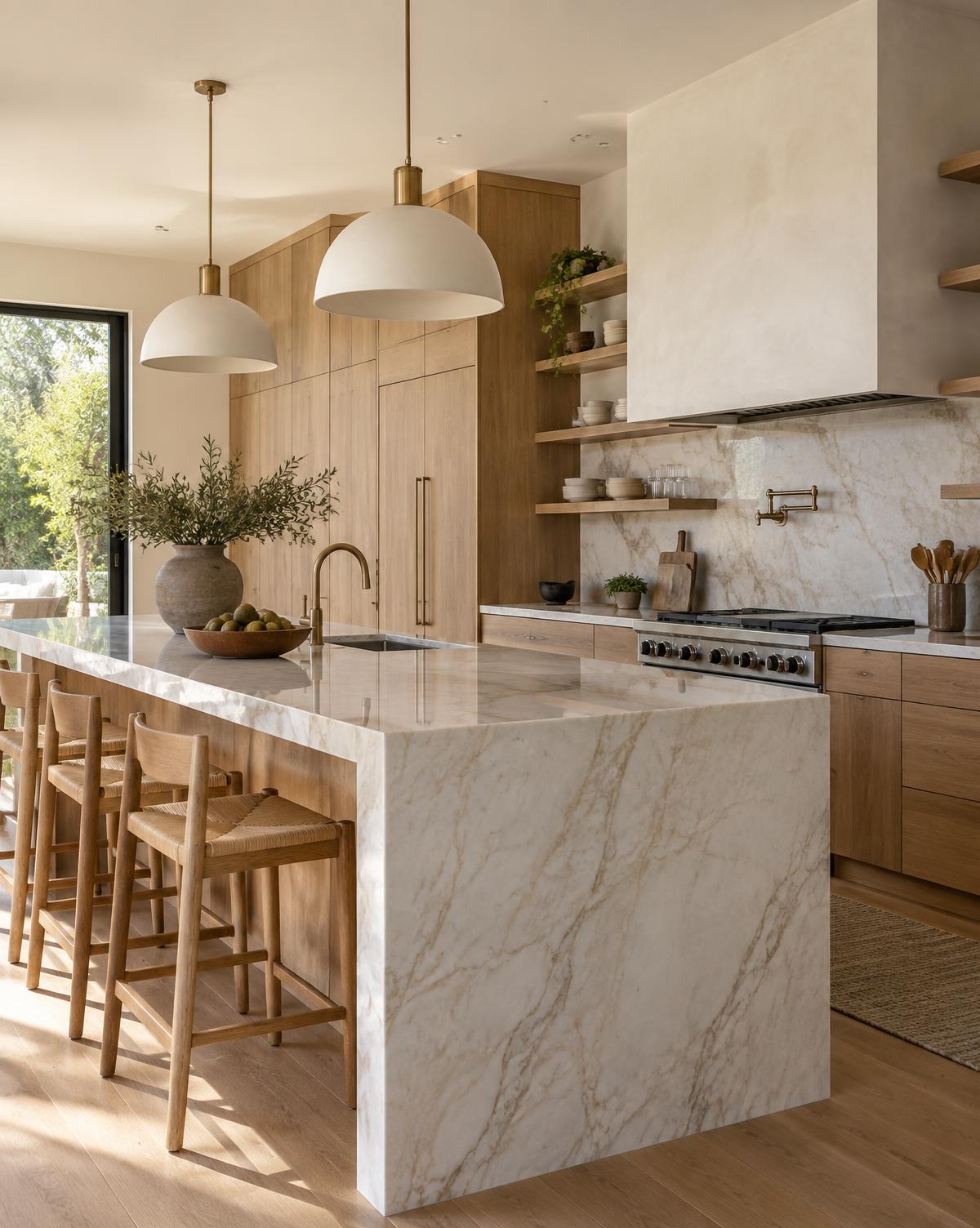
Most reputable stone suppliers and fabricators encourage or even require customers to visit their slab yard to select the specific slab or slabs that will be used for their project, and to approve a layout diagram showing where cuts will be made relative to the slab's pattern, sometimes called a "waterfall" or "bookmatch" layout for dramatic veining that continues visually across a seam or around a corner. Skipping this step and trusting a fabricator to select an appropriate slab sight unseen can result in disappointment if the delivered slab's pattern or color does not match the customer's expectations based on a small sample.
Seams are another important practical consideration, since most kitchens require more than one slab to cover an entire counter run, particularly around large islands or wraparound counter configurations. While skilled fabricators can minimize the visual impact of seams through careful pattern matching and precise cutting, no countertop material can eliminate seams entirely on larger installations, and homeowners should discuss seam placement, count, and visibility with their fabricator during the design phase rather than being surprised by seam locations after installation.
Porcelain slabs, because they are manufactured rather than quarried, sometimes offer larger standard slab sizes than natural stone, which can reduce the number of seams required for a given kitchen layout, though very large kitchens or islands may still require at least one seam even with porcelain's typically generous slab dimensions. This is worth discussing directly with your fabricator if minimizing seams is a high priority for your specific project.
Edge Profiles, Thickness, and Finish Options
The choice of edge profile and surface finish significantly shapes both the final appearance and, to some degree, the practical performance of any countertop material. Common edge profiles range from a simple, clean eased edge to more elaborate options like bullnose, ogee, or waterfall edges that wrap material down the side of an island or cabinet run. Sharper, more angular edge profiles tend to suit contemporary design schemes, while rounded or ornately carved edges often complement traditional or transitional interiors.
Thickness options also vary by material and design preference. Natural stone is commonly available in standard thicknesses, and thicker slabs, or slabs with a built-up edge created by laminating two pieces of the same stone together, can create a more substantial, high-end visual impression at the front edge of the countertop. Porcelain slabs are often manufactured in a thinner standard thickness than natural stone, which some homeowners find gives a sleeker, more minimalist appearance, though many porcelain fabricators offer built-up or mitered edges to replicate the substantial look of thicker natural stone if that aesthetic is preferred.
Surface finish is another meaningful decision point across all four materials. A polished finish delivers a glossy, reflective surface that enhances color saturation and pattern visibility but also shows fingerprints, water spots, and etching more readily. A honed finish offers a matte, non-reflective surface that many homeowners find more forgiving of daily wear, fingerprints, and minor etching, particularly on marble, though honed surfaces can sometimes appear slightly duller in color compared to their polished counterparts. Leathered finishes, which add a subtle textured surface, are increasingly popular on granite and some quartzites for a tactile, organic quality that also helps disguise fingerprints and minor scratches. Homeowners should request finish samples in the specific stone or porcelain pattern they are considering, since finish can dramatically change the character of the same underlying material.
Sustainability and Environmental Considerations
Environmental impact is an increasingly common consideration in countertop selection, though it is a complex topic without a single clear winner among these four materials. Natural stones like marble, quartzite, and granite require energy-intensive quarrying, cutting, and transportation processes, and the environmental footprint of a specific slab depends heavily on how far it traveled from quarry to fabrication shop to final installation site. Sourcing stone from quarries closer to your region, when available, can reduce the transportation component of a stone's overall environmental impact.
Porcelain manufacturing also requires substantial energy input due to the high firing temperatures involved in production, though porcelain's exceptional durability and stain resistance can translate into a longer functional lifespan with less need for replacement due to irreparable staining or damage, which is itself a meaningful sustainability consideration over the full life cycle of a countertop. Some porcelain manufacturers have also invested in more energy-efficient production processes and recycled content in their raw material mix, so homeowners interested in this dimension should ask specific manufacturers about their environmental practices and any relevant certifications.
Because natural stone is inherently biodegradable, in the sense that at the end of its useful life it returns to being simple crushed rock without the chemical binders found in some engineered materials, some homeowners view natural stone as having an end-of-life advantage. Ultimately, homeowners who prioritize environmental impact heavily should ask direct questions of their specific suppliers about sourcing practices, transportation distances, and manufacturing processes, since generalized claims about any material category can vary significantly by specific supplier and product line.
Matching Material to Room: Kitchens, Bathrooms, and Beyond
The best countertop choice can vary meaningfully depending on which room and specific application is under consideration, since different spaces place different demands on a surface. Kitchen countertops, particularly around cooking zones, face the heaviest daily wear from hot cookware, knife contact, acidic food spills, and general high-traffic use, which tends to favor harder, less porous materials like quartzite, granite, or porcelain for the primary work zones, while marble remains a popular choice for a dedicated baking station specifically because its naturally cool surface temperature is well suited to rolling out pastry dough, an application where its softness and etching susceptibility are less of a daily concern if the area is used primarily for that specific purpose.
Bathroom vanities generally see far less abuse than kitchen counters, since they typically encounter water, soap, and cosmetic products rather than knives, acidic foods, and hot cookware, which makes bathrooms an excellent application for marble's soft, luxurious aesthetic without the same durability concerns that arise in a kitchen. That said, homeowners should still be mindful of nail polish remover and other acetone-based or acidic bathroom products, which can etch or damage marble and, to a lesser degree, other natural stones if spilled and left in contact with the surface.
Outdoor kitchens and covered patio spaces present a distinct set of demands centered on UV exposure, temperature swings, and moisture cycling from rain or humidity. Porcelain's UV stability and near-zero porosity make it an increasingly popular choice for these applications, since it resists fading and does not absorb moisture that could lead to freeze-thaw cracking in colder climates. Granite also performs reasonably well outdoors due to its density and hardness, though homeowners in freeze-thaw climates should discuss appropriate sealing and installation practices with their fabricator to minimize moisture infiltration risk at seams and edges.
Common Homeowner Misconceptions Worth Addressing
Several persistent misconceptions circulate around these materials, and addressing them directly can help homeowners make more informed decisions. One common misconception is that granite and quartz (the engineered stone product made from ground quartz particles bound with resin, distinct from natural quartzite) are the same material; they are not, and the two products behave quite differently in terms of heat resistance, appearance authenticity, and overall composition, so homeowners should clarify with any salesperson exactly which product is being discussed to avoid confusion.
Another frequent misconception is that sealing a natural stone countertop makes it entirely stain-proof or etch-proof. In reality, sealers reduce the rate at which liquids penetrate the stone's surface, buying homeowners more time to wipe up a spill before it causes lasting discoloration, but no sealer available for residential use makes any natural stone completely immune to staining or, in marble's case, chemical etching from acidic substances. Understanding sealer as a risk-reduction tool rather than an absolute guarantee helps set realistic expectations.
Some homeowners also assume that a harder material is automatically a "better" or more premium material across the board. While hardness correlates strongly with scratch resistance, it is not the only factor that determines a material's suitability or perceived value; softer materials like marble remain premium, highly sought-after choices specifically because of their aesthetic qualities, not despite their hardness limitations, and many high-end designers and homeowners knowingly choose marble for its appearance while fully understanding and accepting its maintenance trade-offs.
Finally, there is a common assumption that all porcelain looks obviously "fake" or artificial compared to natural stone. While earlier generations of porcelain slab products sometimes had a flatter, more obviously printed appearance, current manufacturing technology, particularly in premium product lines with full-body color technology and high-resolution printing, has advanced considerably, and many homeowners and even design professionals find it genuinely difficult to distinguish high-quality porcelain from natural stone at a normal viewing distance without close inspection.
Questions to Ask Your Fabricator Before Signing a Contract
Selecting the right material is only part of a successful countertop project; selecting the right fabricator and installer is equally important, since even the best material can be undermined by poor cutting, inadequate support, or careless installation. Homeowners should ask prospective fabricators specifically about their experience with the chosen material, since expertise in cutting granite does not automatically translate into expertise cutting porcelain or quartzite, both of which require different tooling and handling techniques.
It is also worth asking about warranty coverage, specifically what is covered (such as material defects, workmanship issues, or seam integrity) and for how long, as well as what routine maintenance, if any, is required to keep any warranty valid. Homeowners should request a clear, written explanation of how many seams their specific layout will require and where those seams will be located, along with an opportunity to review or approve a slab layout diagram before fabrication begins, particularly for natural stone where slab selection directly affects final appearance.
Additional useful questions include asking about the fabricator's process for handling breakage or damage during fabrication or installation, their typical timeline from template to installation, and whether they provide care and maintenance instructions specific to the material selected, since generic advice does not always address the particular characteristics of a specific stone variety or porcelain line. A fabricator who answers these questions thoroughly and transparently is generally a positive signal about the overall quality of workmanship you can expect throughout the project.
Living with Your Countertop: Realistic Expectations Over Time
Regardless of which material a homeowner ultimately selects, it helps enormously to enter the decision with realistic expectations about how the surface will look and perform after months and years of regular use, rather than expecting it to remain in showroom condition indefinitely. Natural stones, particularly marble, will develop character over time in the form of minor etching, subtle patina, or small scratches, and many homeowners come to appreciate this evolution as evidence of a well-used, well-loved kitchen rather than viewing it as a flaw to be anxious about.
Granite and quartzite owners generally report a more stable, unchanging appearance over time due to their greater hardness and chemical resistance, though even these harder stones benefit from periodic resealing and mindful daily care to preserve their original appearance for as long as possible. Porcelain owners typically report the most consistent long-term appearance among the four materials, given the surface's resistance to staining, scratching, and etching, though it is worth remembering that porcelain's brittleness means a sharp, hard impact at an edge or corner remains a real risk that even careful daily habits cannot fully eliminate.
Setting realistic expectations also extends to understanding that no countertop material is entirely maintenance-free in the truest sense; even porcelain benefits from routine cleaning, prompt attention to spills, and general care to avoid unnecessary impact damage. Framing the decision around "what level and type of maintenance am I genuinely willing to commit to" rather than searching for a mythical zero-maintenance surface will lead to greater long-term satisfaction with whichever material is ultimately chosen.
A Practical Framework for Making Your Final Decision
With all of these considerations in mind, homeowners can benefit from a structured approach to narrowing down their final choice rather than feeling overwhelmed by the sheer volume of information involved in this decision. Start by honestly assessing your household's daily habits: how often do you cook with acidic ingredients like citrus, wine, or tomato-based sauces directly on the countertop surface, how frequently do you set hot cookware down without a trivet, and how tolerant is your household of minor imperfections developing over time versus wanting a surface that looks essentially unchanged for many years.
Next, consider your realistic appetite for ongoing maintenance tasks like periodic resealing and the use of specialized stone cleaners, weighed against your appetite for the specific aesthetic each material offers, since a homeowner who deeply loves the look of Calacatta marble but dislikes maintenance tasks might find quartzite with similar veining a more satisfying compromise than forcing themselves into a low-maintenance material they find visually less appealing.
Finally, factor in your budget not just for the initial material and fabrication cost, but for any anticipated long-term maintenance costs, and get multiple quotes from fabricators experienced in your material of choice so you can compare not just price but also the fabricator's specific expertise, warranty terms, and communication throughout the estimating process. Taking the time to physically view slab samples in person, ideally in the lighting conditions of your actual home or a similar environment, rather than relying solely on small chips or digital photographs, will also help ensure the final material matches your expectations once installed.
Bringing It All Together
Choosing between marble, quartzite, granite, and porcelain ultimately comes down to a personal balancing act between aesthetics, performance, maintenance tolerance, and budget, and there is no universally correct answer that applies to every household. Marble offers unmatched visual softness and timeless elegance for those willing to accept its maintenance demands and evolving patina over time. Quartzite provides much of marble's soft, veined beauty with substantially improved durability and heat resistance, at a price point that reflects its more demanding fabrication process. Granite remains a reliable, versatile workhorse with an enormous range of colors, patterns, and price points suited to nearly any design style and budget. Porcelain delivers impressive engineered performance, minimal maintenance requirements, and increasingly convincing stone-like aesthetics for homeowners who prioritize practicality without sacrificing visual sophistication.
By understanding the genuine trade-offs of each material rather than relying solely on showroom appeal, and by asking informed questions of suppliers and fabricators throughout the selection and installation process, homeowners can move forward with real confidence that their chosen countertop will serve their household well for many years to come, both as a functional surface for daily living and as a lasting element of their home's overall character and design.